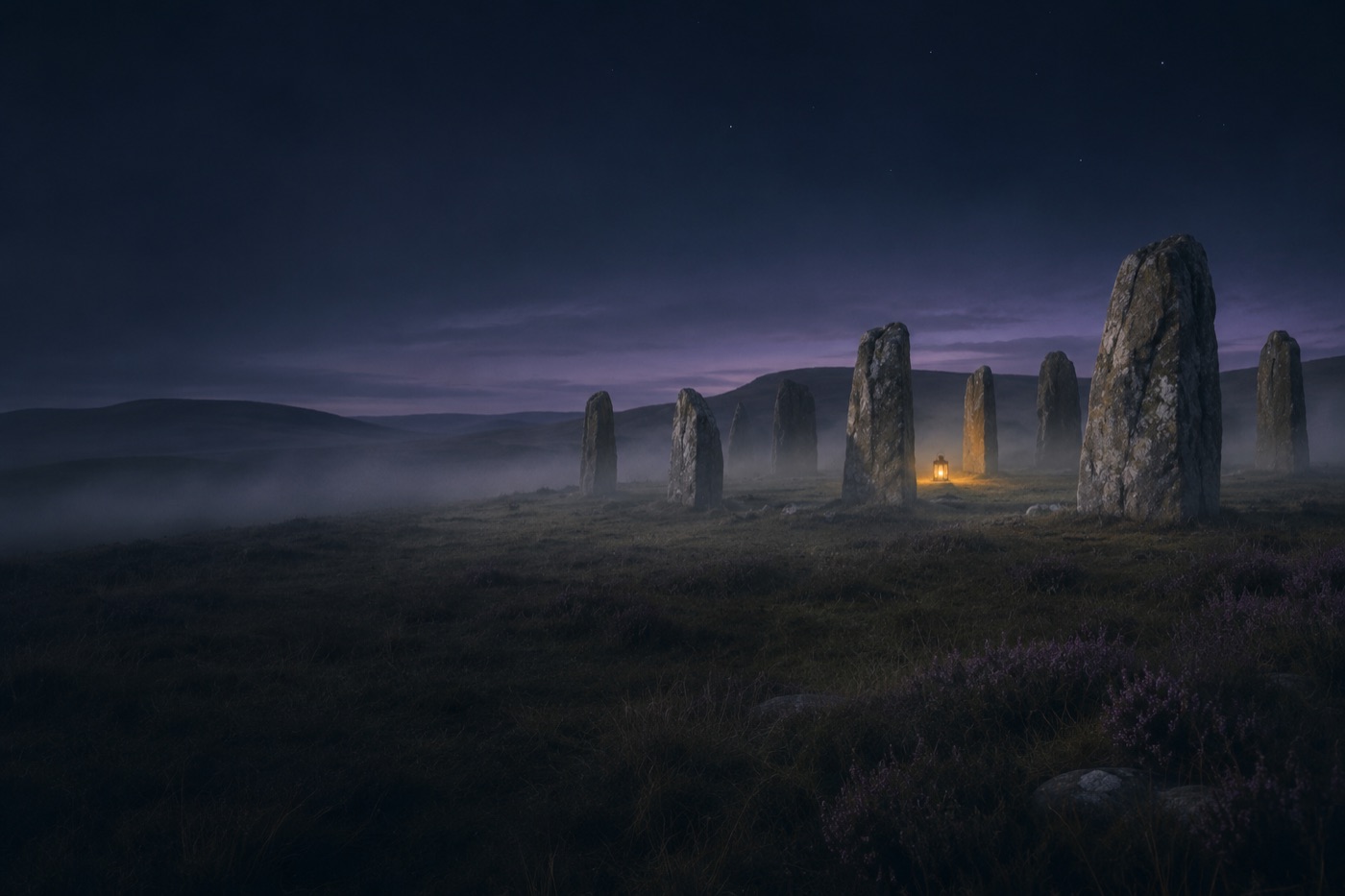
A ring of standing stones under a night sky with low mist and a faint warm light between them

Independent guides / Western tradition / Sacred Britain

The Western mystery tradition and the sacred places of Britain

Clear, neutral guides to where these ideas came from and to the hills, wells and stone circles people still walk to see. Move the lantern to find the paths.

Before you set out

What the Western mystery tradition and Britain's sacred sites share

One story is about ideas. Over about two thousand years, Hermetic writings, Kabbalah, alchemy and the symbolism of lodges and ritual orders were gathered into what people now call the Western mystery tradition. Historians study it as a long conversation carried by books and small groups.

The other story is about places. Glastonbury, Stonehenge and Avebury are visited by walkers, historians, pilgrims and the simply curious, and each carries layers of record and legend. This site keeps the two stories side by side, with dates, sources and sensible travel advice, and without asking you to believe anything.

Six stops

The pilgrim's way: sacred sites in Britain

Scroll to walk sideways from the Tor to the stones. Each stop opens a guide.

  • Glastonbury Tor

    A steep hill in the Somerset Levels with a roofless tower on top, about 158 metres above sea level and free to climb.

    Plan the climb
  • Chalice Well

    A spring at the foot of the Tor whose iron rich water stains the stones red, set in a quiet garden.

    See the garden
  • The Abbey ruins

    Once one of the wealthiest abbeys in England, dissolved in 1539, with a famous medieval claim about King Arthur.

    Read the record
  • Stonehenge

    A ring of sarsens raised around 2500 BC with bluestones brought from west Wales, visited on a timed ticket.

    Book a visit
  • Avebury

    A vast henge with a village inside it, where you can walk among the stones without a ticket.

    Walk the circle
  • The ley idea

    A walker's theory from 1921 that became a modern tradition, and what archaeologists make of it.

    Follow the lines

Five chapters

How the Western mystery tradition was built

Each card arrives lit and settles on the last. They run in rough date order, from late antiquity to the modern reader.

  1. Hermetic writings

    Greek texts from Roman Egypt that Ficino translated in 1463 and that shaped the Renaissance.

    Read more
  2. The Tree of Life

    A diagram of ten spheres and twenty two paths used as a map for sorting symbols.

    Read more
  3. Rosicrucians and lodges

    Pamphlets of 1614 to 1616 and the Grand Lodge of 1717 that gave the tradition its fraternal form.

    Read more
  4. The Golden Dawn

    A London order of 1888 that joined Kabbalah, tarot and ritual into one graded system.

    Read more
  5. A modern reading public

    Twentieth century authors who explained the symbols in the language of psychology.

    Read more

The reading list

Six guides to read in any order

  • What is Western esotericismWhat the phrase covers, which ideas run through it and where historians push back on its claims of great age.
  • A short timelineFrom Hermetic writings in Roman Egypt to the ritual orders of Victorian London, in ten dated steps.
  • Glastonbury Tor visit guideA day plan for the Tor, the spring and the abbey ruins, with the legends separated from the record.
  • Stonehenge or AveburyWhich circle suits which kind of day, and what else to see nearby.
  • What are ley linesA short history of an idea that began as a walker's theory and grew into something else.
  • Sacred sites in EnglandAccess, safety, offerings, weather and manners in one calm checklist.

Quick answers

Questions visitors ask

What is a Western mystery school?
A modern name that groups use for their own teaching programmes, borrowed from the ancient mystery cults of Greece. Historians do not treat them as continuous with the ancient cults. The explainer covers the idea and the doubts.
Is the Western mystery tradition one organisation?
No. It is a modern name for many currents of ideas and groups. The explainer shows how they relate and where historians disagree.
Is Glastonbury Tor free to climb?
Yes, the Tor is open to climb without a ticket, though the paths are steep. See the Glastonbury Tor visit guide for what to bring.
Can you touch the stones at Avebury?
At Avebury you can walk among the stones, while at Stonehenge visitors keep to a path. The Stonehenge or Avebury guide explains the difference.
What are ley lines, and are they real?
The idea has a known origin in 1921, and archaeologists doubt the later energy claims. Read what ley lines are and where they came from.